Saturday, August 1, 2015

Brest and Cherbourg, France

Brest is a port in the northwest part of France, just before you enter the English Channel. The day we were there was May 1, a Friday. It was the May Day holiday in France; there was basically nothing open in Brest. It was also cold and rainy. Brest was virtually destroyed in World War II. The combination of things let us stay on the ship and not go ashore.

Below is a photo of the inlet. This small patch of blue sky is all the blue we saw that day.


The photo below is from WWII taken by a British plane. This is the German U-boat pens built by the Germans after the capture of France. They were used to refit and repair German submarines, the U-boats. The water could be pumped out of the individual pens thus making it a dry dock. The roof was originally 12 foot thick concrete; as the war went on an additional 20feet of material was added to the roof. Only a handful of bombs ever penetrated the roof and they did very little damage to the interior. The second photo shows these same pens today; they are used by the French navy for small ship repair.


The photo below shows some old fortifications, probably gun emplacements, from WWII.


The next photo shows the pier at Cherbourg. The Titanic docked here before setting out across the Atlantic on its one and only voyage. The old terminal is the building on the left. The large gangways used by the Titanic are still present, and appear to be in pretty good shape for being at least 100 years old. The old terminal is now a museum. There is also an old French nuclear submarine that is part of the museum which can be seen just behind and to the right of the newer building.

The photo below show the Titanic gangways up close and the gangplank for our ship being put together, kind of like an erector set.


When they got our gangplank put together we went ashore. It was cold but not raining. This was Saturday May 2, still part of the French holiday. Below is a fresh seafood vendor, at the end of the dock just before you go into the town. It was cloudy and cold, but no rain. The pier is right next to the old town.


It was market day and their were several vendors on the old square. Below is a vegetable stand followed by two photos of a cheese vendor.


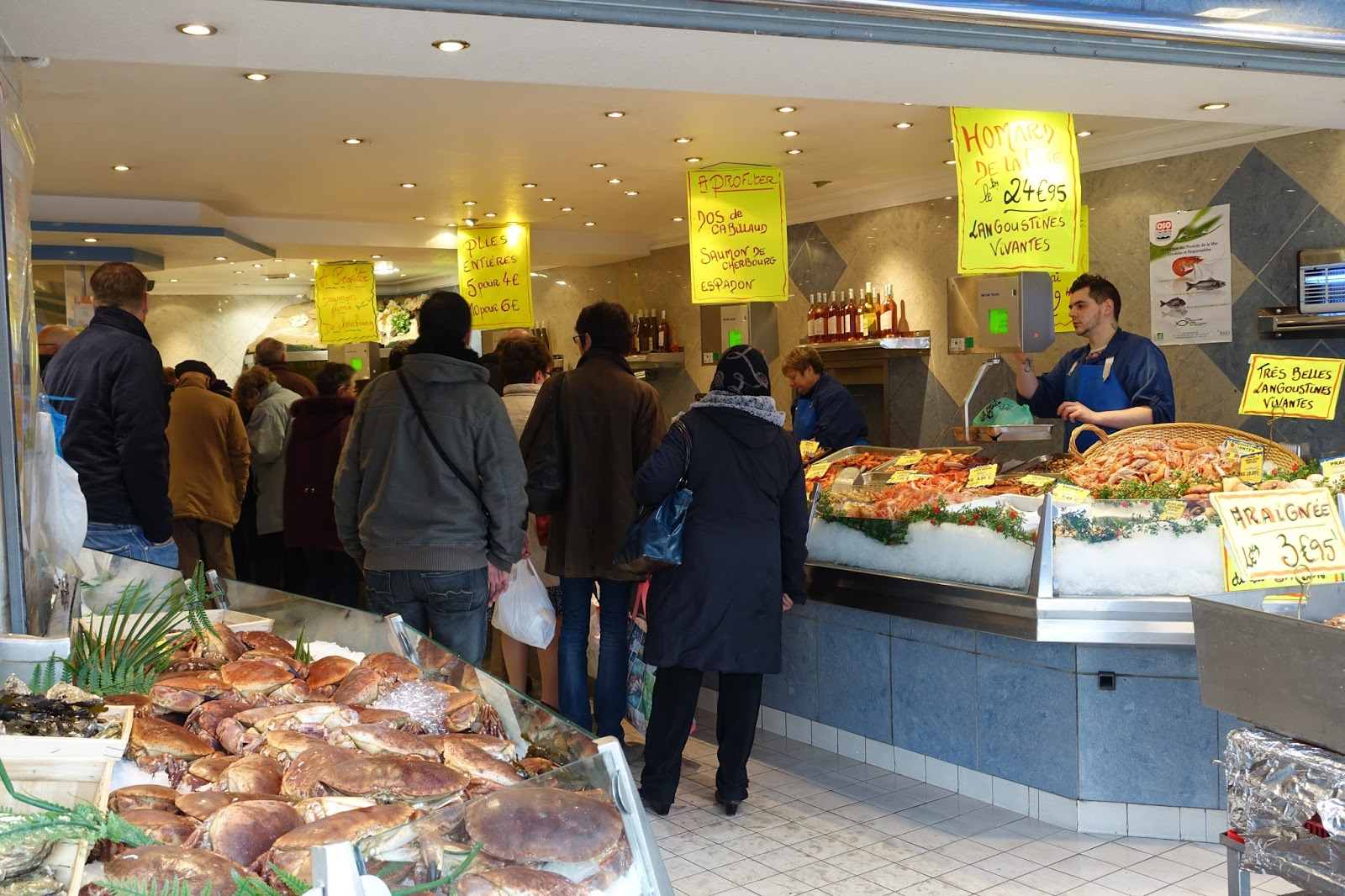
Below are two photos of a seafood shop. Notice the size of the sea scallops in the first photo. The crabs kept trying to crawl out of their bin.


The three photos below are of old Cherbourg. I don't know the name of the church.


Shortly after we got back to the ship We saw a passenger being taken to an ambulance for transport to a hospital I presume. I never heard what the passenger's problem was.


As the ship pulled out of the harbor we passed these old fortifications. These date to the Napoleonic wars and were also used in WWII.

 
Cherbourg was one of the prime targets for capture during the Normandy invasion of WWII. There were several ship sponsored excursions to the Normandy beaches. Having been there a few years ago by car on our own, we declined to go this time.


Saturday, July 18, 2015

The Azores

The Azores are a group of nine volcanic islands in the Atlantic Ocean 850 miles west of Portugal.They were first settled in about 1440 AD and belong to Portugal. Although Portugal was officially neutral in WW II they leased airfields to the Allies . When my father flew home from Europe at the end of WW II his plane landed at one of those airfields for refueling. Our cruise from Tampa to England stopped at the port of Horta, on Faisal Island. We were there only a few hours but did get off the ship and wander around Horta.


Above is our ship at the pier in Horta. The photo below is of a brightly painted house.


This old rock house is probably one of the older houses in Horta.


A small park, church steeple in the background.


This building is built around the corner, as it were, as is one in the second photo.


I love all this color.


Another interesting corner building.


I love these gardens.


We found this little bit of America. We have known more than one European who couldn't leave until they had seen Route 66.


The photo below is a view of  Horta and the harbor from our ship. The tugboat is taking one of our tenders away. The winch broke on this tender and it couldn't be retrieved. The captain said it would be picked up by a container ship and taken to Lisbon where our ship would pick it up in a week or two. He assured us that there was plenty of room in other lifeboats for the passengers that were assigned to that tender.


This last photo is of Mt. Pico, on Pico Island, taken from Horta. Mt. Pico is 7713 feet elevation, and is the tallest mountain in Portugal.


Wednesday, July 8, 2015

Chartres Part III

We were at Chartres Cathedral in Chartres, France on May 5. It was a beautiful day but unfortunately we were only able to spend about two hours there, late in the afternoon. I was able to get some photos of some of the stained glass and a few of the exterior.

The first two photos are of the exterior. The first one is the first real good look at the cathedral when you are walking from the train station. The second shows the west facade.


There is a window called the Good Samaritan Window, shown in the photo below. The bottom half of the window shows the Good Samaritan; the top half shows the creation and the fall of Adam. There are two other medieval Good Samaritan windows, one at Sens and one at Bourges. This window was interpreted in medieval times as showing the creation, the fall of Adam, and Adam(mankind) being saved by Jesus. Jesus takes Adam to the church and instructs the church to take care of him until he, Jesus, returns.


The next photo shows the north rose window with the lancets. This window was given to the church by Blanche of Castile and her husband the King of France.


The photo below shows just the rose above the lancet windows. In the center of this window is Mary with Jesus on her lap. The small vertical windows at the bottom of the rose are the fleur de lis of France and castles representing Castile.


Below is the south rose window with its lancets.


The next photo show only the rose. In this one Christ is in majesty.


This photo is taken from the east end of the cathedral and shows the St. Piat chapel on the left which was added to the cathedral in about 1320 and the outside of the apse. Notice the wisteria blooming on the wall in the lower right corner.


The last photo shows that same wisteria from as different angle plus the cathedral.


I have not included a lot of detail in this post because the first two posts about Chartres already have a lot of detail. Chartres remains one of my most favorite places in the world. I have a goal to visit it when the cleaning is all finished, perhaps in 2017.

Wednesday, June 24, 2015

Planes, Trains, Ships, Automobiles, Buses, Taxis and Shuttles

We have just returned from a two month odyssey. I had some technical difficulties while on the trip so I couldn't write while we were traveling. Anyway, here's how it went:

We left home April 18th by car for the airport.


We were driven to Sky Harbor airport in the Jeep by our son, Dean. At Sky Harbor we boarded a plane and flew to Tampa, Florida.


In Tampa we took a shuttle to our hotel.


We stayed in Tampa overnight; the next morning we saw this fellow on the beach outside the hotel.


We then took a taxi to the cruise port.


At the cruise port we boarded Holland America's ship the Ryndam for a transatlantic crossing.


The cruise companies tend to cruise the Caribbean and other warm water areas in the winter. In the spring they send some of them to Europe for the simmer. The cruise to get to Europe is called a repositioning cruise and is sometimes cheaper than you might expect. That's what this cruise was.

The first stop was in the Azores; a view of the harbor is shown below.


Our next stop was Brest, France. The old Nazi submarine pens from WWII are shown below.


Next was Cherbourg. Look at all the lovely, fresh seafood!


Next was Zeebrugge, Belgium where we took a bus to Brugge.


Brugge is a wonderful city, full of canals and old buildings plus the only Michelangelo sculpture to be outside of Italy in his lifetime.


From Brugge we sailed to Harwich, England where we disembarked. We caught a bus waiting on the pier which took us to St. Pancras station in downtown London.


At San Pancras( I always want to call it St Pancreas), we boarded the Eurostar train, which goes through the tunnel beneath the English Channel and lands you in Paris in a little over two hours.


When we got to Paris we were met by an official greeter.

 
We stayed in an apartment in Paris with our daughter, Carolyn, her husband Jon and Gwen. We visited Chartres, Sacre Couer and St. Denys. Then we took a train to Saarbrucken, Germany where Carolyn et al live.


Deutsche Bahn went on strike so we rented a car in Saarbrucken.


We visited many interesting places in Germany and France, including Aachen, Trier, Worms, Speyer, Strasbourg and the Black Forest. I will be doing individual posts on these and other places, as well some of the places on the way to Germany.

The vehicle shown below was at a castle on the Rhine. There was a hotel and restaurant there and I presume they use this vehicle for weddings, etc.


I love this license plate.


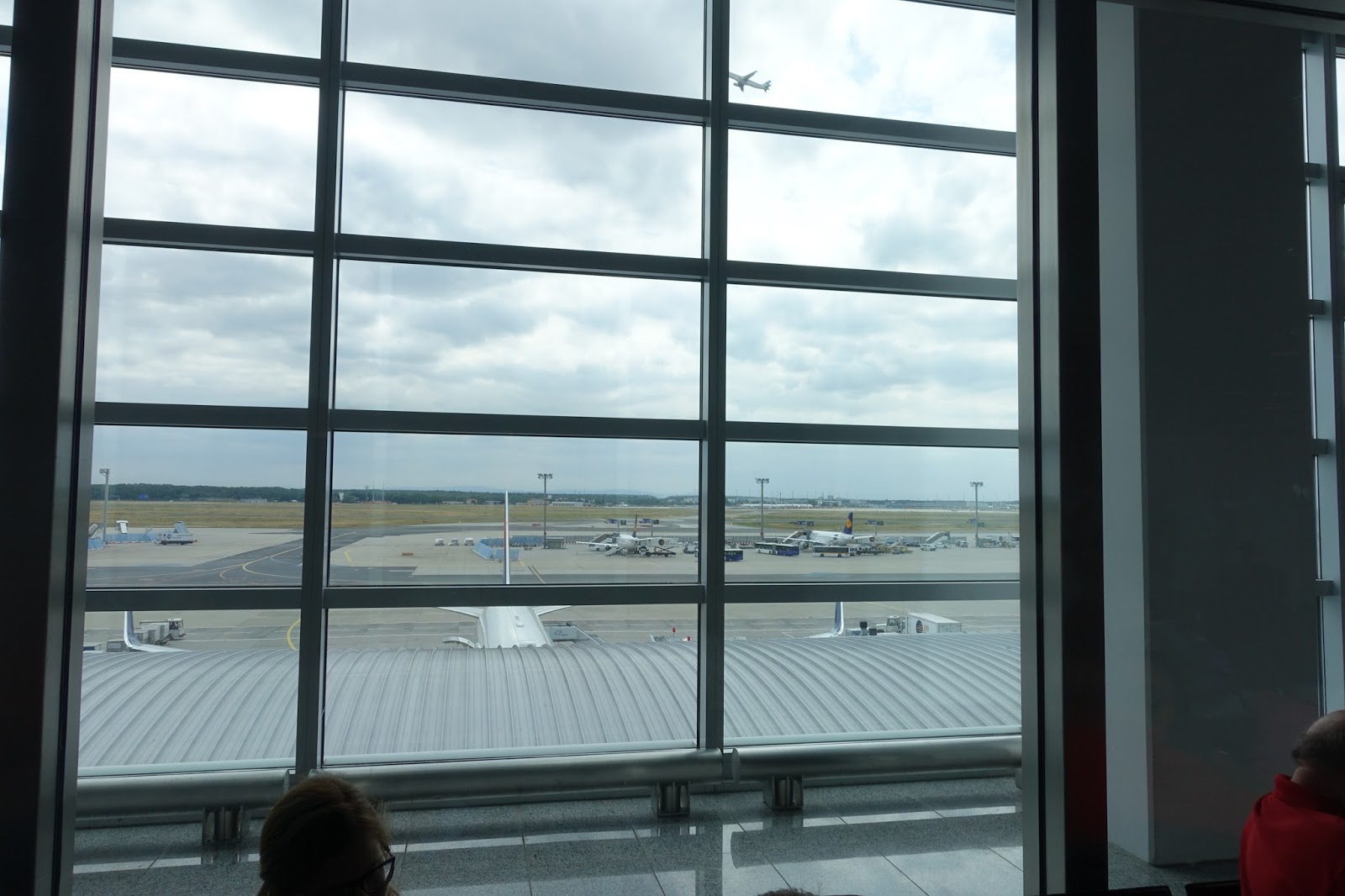
When it was time to leave we took a train from Saarbrucken to Frankfurt airport, the rail strike having ended.


We boarded a plane in Frankfurt which took us to JFK, New York.


From JFK we flew to Phoenix where we were met by our son, Dean. who gave us a ride home. Got home late on June 9.  Stay tuned for more posts from this great trip.